
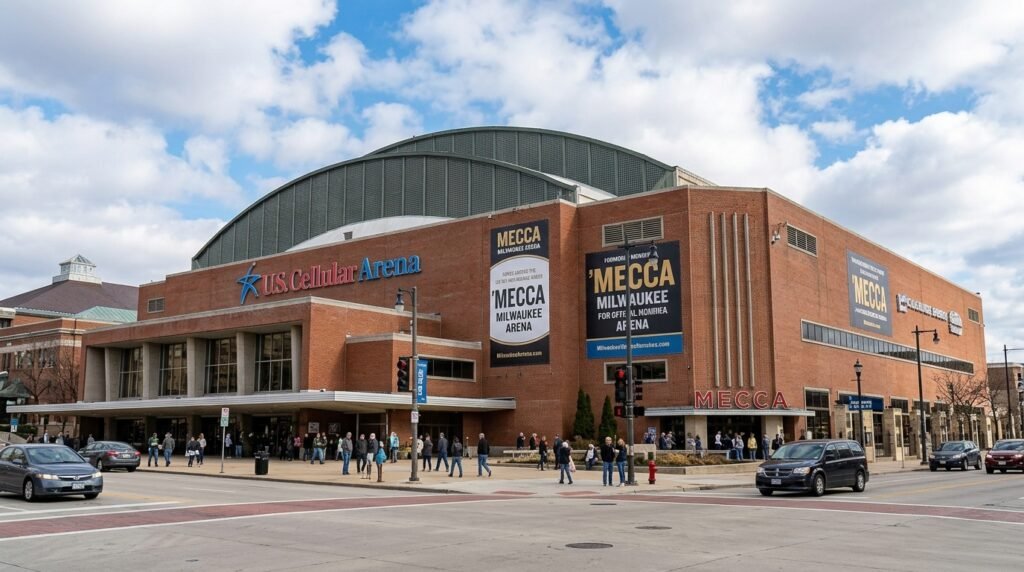

Have you ever walked into a building and felt decades of excitement hanging in the air? That is exactly what happens when you step inside the historic venue once known as the milwaukee us cellular arena. Located in the heart of downtown Milwaukee, Wisconsin, this classic building has hosted legendary basketball games, rock concerts, and family shows since 1950.
Over the decades, the arena has changed its name several times to reflect new sponsors and eras. Many long-time residents still call it the MECCA, while tech-savvy sports fans remember it as the milwaukee us cellular arena during its 2000 to 2014 era. Today, it stands proud as the UW-Milwaukee Panther Arena. Let’s explore why this venue holds such a special place in the hearts of sports fans and music lovers alike!
Early Days: Opening in 1950
When the building opened its doors in April 1950, it was one of the most modern sports complexes in North America. Engineers built it specifically to handle live television broadcasts, which were brand new at the time. Thousands of fans packed the stands to watch college sports and circus performances.
The venue quickly became the main spot for indoor entertainment in Wisconsin. Families traveled from all over the Midwest to watch hockey matches and championship games. Long before it took on the title of the milwaukee us cellular arena, it had already built a foundation of local pride and community history.
The Famous MECCA Era
In 1974, the arena joined a bigger convention center complex and officially became the MECCA Arena. During this golden age, the venue hosted some of the biggest names in pro basketball. Superstar athletes like Kareem Abdul-Jabbar ran up and down the hardwood floor, bringing pure joy to local fans.
The MECCA was famous for having an energetic, loud crowd. Because seats were built close to the floor, fans felt like they were right on top of the action. That cozy setup gave home teams a huge advantage during tight playoff series!
The Iconic Pop Art Court Design
You cannot write about the building that became the milwaukee us cellular arena without mentioning its super cool floor. In 1978, the arena commissioned famous pop artist Robert Indiana to paint a custom hardwood court. He used bold colors like bright yellow, orange, and red, complete with huge ‘M’ shapes on both sides of the court.
This eye-popping design became an instant global sensation whenever games were broadcast on TV. Fans instantly knew what stadium they were looking at. The pop-art court remains one of the most famous floor designs in the history of professional sports.
Transition to the Milwaukee US Cellular Arena
As time went on, the venue needed modern updates and fresh sponsorship. In the spring of 2000, telecommunications giant U.S. Cellular signed a major naming rights deal. That is when the venue officially became the milwaukee us cellular arena.
This brand-new partnership brought millions of dollars in upgrades to the historic building. Workers installed wider, cushioned seats, improved accessible spaces for fans with disabilities, and put in dynamic video scoreboards. The milwaukee us cellular arena successfully updated its style while preserving its original 1950s charm.
Legendary Musical Acts and Concerts
While sports built its reputation, music turned this space into a true cultural temple. Before, during, and after its era as the milwaukee us cellular arena, thousands of rock, pop, and country legends performed here. The acoustics inside the venue created a raw, roaring energy that artists loved.
- Rock Legends: The Beatles, Led Zeppelin, Jimi Hendrix, and The Rolling Stones.
- Pop Icons: Elvis Presley, Frank Sinatra, and Jackson 5.
- Modern Performers: High-energy touring bands, stand-up comedians, and family ice shows.
Basketball Heritage: NBA and College Hoops
Basketball is built right into the DNA of the milwaukee us cellular arena. The Milwaukee Bucks called this venue home from their inaugural season in 1968 until 1988, winning their first NBA title here in 1971. The arena also hosted the 1977 NBA All-Star game.
In addition to pro sports, college basketball teams thrived in this gym. The Marquette Golden Eagles played here during their legendary 1977 national championship run. Later on, the UW-Milwaukee Panthers made the milwaukee us cellular arena their regular home court, establishing a deep college basketball tradition.
Major Renovations and Modern Upgrades
Older buildings need continuous love to stay safe and comfortable for guests. Over the years, the Wisconsin Center District invested heavily in maintaining the facility. Major renovations replaced aging plumbing, upgraded concession stands, and added high-definition video displays.
During its tenure as the milwaukee us cellular arena, management added fresh lighting systems and upgraded locker rooms. These upgrades allowed the venue to host fast-paced indoor soccer games and minor league hockey without losing its retro vibe.
Community Events and Local Impact
The milwaukee us cellular arena was never just for big-ticket professional games; it belonged to the local community. Generations of Milwaukee students walked across its stage to receive their high school and college diplomas.
The floor has hosted trade expos, charity fundraisers, the annual Shrine Circus, and exciting roller derby bouts. Local residents have decades of fond memories attached to this single block of downtown Milwaukee.
Rebranding to the UW-Milwaukee Panther Arena
In 2014, the naming rights agreement with U.S. Cellular reached its end. The University of Wisconsin-Milwaukee stepped up to forge a new 10-year partnership. The historic facility was officially renamed the UW-Milwaukee Panther Arena.
New black-and-gold seating was added to match the university’s official colors. Even with a new name, local sports fans, journalists, and historians frequently refer back to its era as the milwaukee us cellular arena when recounting the venue’s rich history.
Visiting Today: What to Expect
If you visit the stadium today, you can still feel the vintage magic in the air. The front entrance still features classic 1950s architecture and restored terrazzo flooring. Yet inside, you get all the perks of a modern arena experience.
- Great Local Food: Enjoy famous Wisconsin brats, fresh cheese curds, and craft drinks.
- Close-Up Sightlines: Every single seat gives you an intimate, unfiltered view of the action.
- Central Downtown Location: Just a short walk from great local hotels, riverfront dining, and museums.
Conclusion: A Living Milwaukee Treasure
The milwaukee us cellular arena represents far more than just concrete, steel, and wooden floorboards. It is a living timeline of Midwestern sports culture, classic rock history, and community gatherings. From its groundbreaking opening in 1950 to its ongoing role as a premier college sports venue, it continues to serve as an indispensable cornerstone of downtown Milwaukee.
Have you ever attended a game, concert, or graduation at this iconic arena? Share your favorite memories in the comments below, or pass this article along to a fellow sports fan!
Frequently Asked Questions (FAQs)
Q1: What was the original name of the milwaukee us cellular arena?
When it first opened in April 1950, it was simply named the Milwaukee Arena. It was later renamed the MECCA Arena in 1974 before becoming the milwaukee us cellular arena in 2000.
Q2: What is the venue called today?
The building is currently named the UW-Milwaukee Panther Arena through a partnership with the University of Wisconsin-Milwaukee.
Q3: Who plays their home games at the arena now?
It serves as the home court for the UW-Milwaukee Panthers men’s basketball team, the Milwaukee Admirals hockey team, and the Milwaukee Wave indoor soccer team.
Q4: Why was the arena’s floor so famous in the 1970s?
In 1978, famous artist Robert Indiana painted a brightly colored pop-art design on the court with huge orange ‘M’s, making it recognizable worldwide.
Q5: How many seats are inside the arena?
Depending on the event layout, the arena seats around 10,783 fans for basketball and up to 12,700 for large concerts and civic events.
Q6: Did the Milwaukee Bucks win a championship here?
Yes! The Milwaukee Bucks played in this arena during their famous 1970–1971 season when they won their very first NBA Championship.